Live-blogging the beta launch of www.linernotes.com, Day 2. “Planning, in abstract”

[Welcome back to the live-blog. You can find the previous entry here.] 

I’d like to share my detailed plan for the beta launch. But I can’t, because I don’t one. For the most part that’s intentional – I rarely make detailed plans. I always have clear high-level goals, and I do keep a very long to-do list (using Asana). But I’ve found that anything more exhaustive has normally been a waste.

In this post, I’m going to tell you why. And then in tomorrow’s post I’m going to actually work out a detailed plan. These aren’t normal times, after all. I hope you like whiplash.

I’ve always had an erratic relationship with planning. Some of that probably comes from my parents. My mother is a consummate planner – when she travels, she books the tickets five months in advance. My father would probably just buy plane tickets at the airport if that still worked[1]. Growing up, we would pile the family into the car and he’d drive us over the Rocky Mountains toward some vague destination. When he got tired of driving, we’d bounce from motel to motel until he found a vacancy.

When starting a company, it’s very easy to fall into either of those two extremes of planning. I’ve certainly done plenty of both, and neither really works.

Take, for example, the traditional business plan. A while back, I grudgingly wrote a complete one at the request of a potential investor. It took at least two full days of work, and it was full of specific milestones and spending projections and target completion dates. But as Helmuth von Moltke accurately warned, “No battle plan ever survives contact with the enemy.” It only took about a month of actual building before my priorities had shifted enough to make the targets obsolete.

The less predictable the situation is, the more my father’s method appeals. He doesn’t need to predict how tired he’ll be after driving to Steamboat Springs, or how long my sister will tolerate Dinosaur National Monument. He can just show up and leave when we’re ready.

With LinerNotes, a huge part of the challenge has been just mapping the specific shape of the problem and iteratively sifting practical solutions out of a bunch of crazy ideas. Rigorous planning is expensive, and it’s a poor eureka moment that can be planned in advance. If I stay loose and flexible, I can just build one feature at a time, test how users react, and use that data to figure out what to build next. But being reactive also has dangers – last minute travel can be extortionately expensive, and there’s always the risk that the motels in town are 100% sold out (which happened to us more than once.) I decided just a couple of weeks ago to try to go to SXSW and the logistics of finding lodgings in Austin are giving me flashbacks.

I’m still working on finding the right balance. Tomorrow I’ll walk you through my current process. 

[1] I actually did that once, because there was a problem with the space shuttle. True story.

Live-blogging the beta launch of www.linernotes.com, “Day 1”

After a full year of work, my startup LinerNotes.com is finally just-about-ready to launch an open beta. The site is still short of my vision by a mile. But I’ve decided that I stand to gain more from real feedback than I risk by disappointing early adopters and totally embarrassing myself in front of my friends and various onlookers.

It’s been a long, long road getting here. I thought I’d be excited when I reached this point but more than anything I’m confused and mildly terrified. Entrepreneurship is always full of ambiguity, but now more than ever I have no idea what to expect. I can imagine a whole range of outcomes, and I definitely know which ones I hope for and which ones I fear. But I just don’t know how to assign probabilities to those possibilities, and of course I know how often the future makes a mockery of ability to imagine it.

So I’m doing this blog series. I figure that by writing openly and honestly about my launch process – about my expectations, my plans, my decision-making, and even a bit of my personal psychology – I’ll be able to impose at least a little structure on process. If nothing else, writing helps me think more clearly. I also hope that telling my story will make it easier for the people in my life to understand me, for early adopters to connect with me, and for the types of people I want to work with to find me. And I hope that someday this series will help another first-time entrepreneur through his or her first launch.

So here’s the plan: as often as reasonably possible over the next 2-3 weeks, I will write 200-500 words about some aspect of my launch process. Some days the posts may be topical (e.g. an overview of my technology stack, or a discussion of quantitative metrics) and some days they’ll just be diary entries about the events and challenges of the day. 

I have to admit I’m a bit nervous about putting this much information online. I’m a very private person by default and this series will be by far the most personal thing I’ve ever written for general consumption. I also have a tendency toward pathological honesty that’s in pretty stark contrast to the rampant puffery of traditional startup blogging. I’m concerned that writing about my uncertainties and constant failures is going to make it difficult for eventual investors or collaborators to believe in me the way they believe in more “reality distorting” entrepreneurs.

But one of my greatest goals in life is to work with people who have the same respect for reality that I do. And if writing authentically cuts the inbound interest in my inbox from zero down to zero, then so be it.

Welcome to the live-blog.

Stopping the music money stream scream: C.R.E.A.M.

[This is another long response to a post on Albert Wenger’s blog.]

Thanks for writing about this, Albert. The issue has been on my mind lately as well.

I’ve read at least a half-dozen pieces full of hand wringing about the economics of streaming. It’s certainly an important issue for the future of music. Streaming provides by far the best user experience I’ve found, and dominant experiences have a habit of dominating industries.

I’d like to elaborate a bit on your themes: 

Transformation of the Label:

We all sort of take it for granted that there is such a thing as “the music industry” that is defined as the oligopoly of major labels. But the labels only exist in the first place because for a century the only way to transmit music to consumers was to manufacture, distribute, and sell pieces of plastic. Promotion, A&R, financing etc. came along for the ride mostly because of the economics of vertical integration.

Now that the cost to transmit music to consumers has fallen to literally zero, labels have lost their core raison d’être. Normally an industry without a customer would go the way of Kodak. But our political system has decided that “To promote the Progress of Science and useful Arts, by securing for limited Times to Authors and Inventors the exclusive Right to their respective Writings and Discoveries” translates into “let’s incentivize Mr. Zombie Walt Disney to create more memorable characters in the past by extending copyrights another 20 years.”

But as we wait for the expensive legal life-support to gradually fail, the “peripheral” functions of labels are already becoming their core business. I’ll discuss below how they can add real value by focusing on those functions.

Dealing With Consumer Surplus:

By removing the cost of distribution, the internet gives any artist (including an obscure horse-dancing Korean rapper) an enormous audience while simultaneously forcing them to compete against the whole history of recorded music. These conditions exponentially magnify the marginal rewards of excellence, which is exactly what we’re seeing in music (and in Hollywood, and in finance, and in technology…)

All of the dismay over artists’ earnings focuses on acts like  Zoe Keating, Galaxie 500, or Grizzly Bear. Those three artists have one thing in common: they’re obscure (at least relatively – they have 1,160,623, 4,538,748 and 36,486,805 total song listens on Last.fm respectively.) But you won’t read any articles complaining about how little Lady Gaga or Rihanna are earning (180,396,404  and 120,265,212 plays respectively, and that’s probably a vast understatement because the average Rihanna fan is much less likely to use Last.fm)

It shows a curious lack of historical perspective to complain that the Zoe Keatings of the world can barely earn a living now. The “now” implies that they would have been wealthy in 1980; on the contrary, they would simply never have been signed by a label and would never have had any career, much less an only-modestly-lucrative one. How many of the unsigned D.I.Y. Punk or Metal bands from 1982 ever earned even $30k/year from their music?

Personally, I like Zoe Keating and Grizzly Bear. I’d probably buy tickets to their shows. But there is no way I would have paid $16 for one of their CD’s or iTunes albums after hearing them played once in a friend’s dorm room in 2006. And without viral promotion that cheap distribution allows, they probably never would have gotten off the ground.

The only way musicians have ever gotten rich is by having a ton of fans. And so labels have an opportunity to add a lot of value by becoming more like Hollywood managers/agents and helping musicians effectively use all the channels available to get more people listening to their music.

The Economics of Streaming:

There’s something awfully fishy about all the numbers that are being thrown around. If the average American spends $43/year on recorded music and a Spotify premium subscription costs $120/year, then streaming services are collecting more money per customer. So where does the money go? It’s clearly not staying with Spotify, which is nowhere close to turning a profit.

The answer (probably; the numbers aren’t public) is that the lion’s share of the money is going to major labels to bribe them into deigning to accept money for their back catalog, and the rest is going to disproportionately popular artists like Rihanna. Spotify streamed over 13 billion songs in 2012, of which Galaxie 500 represented 7,800 (i.e. 0.00006%).

In other words, streaming is actually making the total pot bigger. The problem isn’t with the amount of money – it’s with the distribution.

Distribution in Space and Time

“Long-tail” acts like Zoe Keating (who, as I mentioned above, probably could not even exist before digital music) are being hit with two economically wonky headwinds: first, streaming presents them with a cash flow crisis; second, bulk licensing inefficiently homogenizes pricing.

Cash flow:

An entrepreneur sells a widget for $400 and has the choice of collecting payment immediately or receiving $10/month every month for five years. Even though the second option eventually generates $600, most entrepreneurs will choose the first. Entrepreneurs are generally cash poor and prefer being able to pay bills now even if it means retiring a bit later.

Large corporations, on the other hand, can be exactly the opposite. GE has an entire branch (GE Capital) that provides financing to consumers so they can buy a washing machine now and pay for it gradually. By reaping profits slower, GE is able to sell substantially more in total.

Zoe Keating is in the same position as the entrepreneur. iTunes gives her a one-time upfront payment, whereas Spotify is an annuity. If we assume her earnings-per-song-play are the same (see below) then her total earnings over time should be the same.[1] But she can’t pay her rent with royalty checks from 2023.

But…actually she can. It’s time to call in the investment bankers. There are simple mathematical formulas to calculate the present value of an annuity. If an analyst can estimate how many times a song will be played in total over the next 20 years she can easily calculate the total earnings from those streams and write Zoe Keating a check for 85% of that amount by borrowing the money from a bank and eventually paying it back as the royalties come in.

So this is the second way labels can add value: by becoming investors. They can develop expertise in predicting long-term song popularity and market sizes (perhaps using some of that juicy big data) and then perform the financial engineering necessary for artists to cash out now (i.e. “provide an advance”). That’s always been an essential function of labels (and publishers) but streaming makes it both harder and more important.

Pricing homogeneity:

When everyone pays $16 for a CD, some buyers get a much better deal. Many consumers will listen to the CD once or twice and then consign it to a shelf. Some will listen to the CD one thousand times. That means the price-per-play of the CD varies from $16 all the way to 1.6 cents. But every customer still pays $16, of which ($16 * ~7%) ~= $1 goes to the artist. So artists are actually able to charge their casual fans a lot more (and also force them to pay for the ~50% of an album that’s usually filler.) 

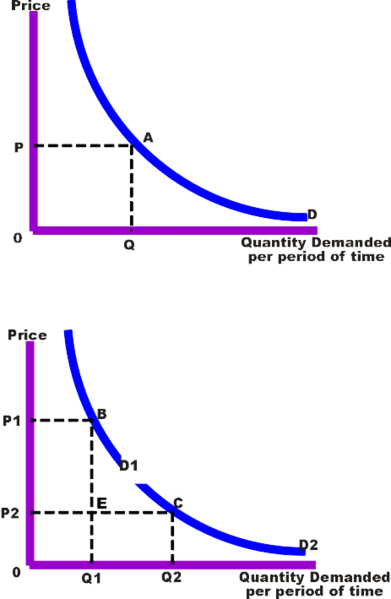
In streaming land, both of those advantages disappear. Consumers only pay for the actual product they want in the exact quantity they want. And crucially, they all pay the same price regardless of willingness to pay.  That leads to a classic economic conundrum:
 image


Even if artists do earn only 0.3 cents per stream of their songs, they can actually earn the same amount as they would from a (major label) CD sale if fans stream their albums ~50 times ($1 / ($.003 * 8 non-filler songs)).  Most fans will never do that, but some will, and would even if they had to pay extra. If artists could charge different amounts to different fans, they could capture more of the demand curve and earn more money.

Price homogeneity is a hard nut to crack: one idea I discuss in an old blog post is to make subscriptions “modular” (e.g. pay extra to listen to the Beatles on Spotify) and dynamically re-price the modules based on demand and consumer profiles. But that’s probably too complicated to happen any time soon.

Kickstarting the Promised Land:

Kickstarter is extremely exciting because it fixes both wonkish economic problems in one swoop. If an artist can build a loyal fan base, she can use Kickstarter to transfer her earnings from future to present (even if no label or banker is willing to take the risk.) And she can effectively price discriminate by encouraging the most loyal/wealthy fans to pay a lot more. Plus, she can use the harvested contact info to engage with fans and encourage them to come to her shows and buy her t-shirts (or much more lucratively, her favorite brand of soap).

So in summary: a bigger pie logically has to mean a bigger meal. We just may have to wait for a few unwelcome uncles to leave the table. 

image

 If you like this post, please up-vote on Hacker News

 [1] I’m ignoring the effects of interest and inflation on the time value of money because it’s complicated and I’m assuming that streaming costs will grow over time at approximately the appropriate rate.


3 Principles for the Incredibly Exciting Future of Search

[Note: this post is adapted from a long comment I made on one of Albert Wenger’s recent posts]

Albert, I think you’re absolutely right that the search game is just getting going. If you define search as “finding relevant web pages,” then Google has search locked up and solved. But if you define search as “providing the information you need to make the best decisions all the time” then there’s a vast and fertile green field ahead. At the end of the day, the goal of search isn’t to deliver links – it’s to deliver wisdom.

So how are we going to do that?

Let’s start with a thought experiment: imagine that you yourself are hired to be a search engine. Now imagine that your wife is a search user and so naturally any time she needs something you want to give her the absolute best and most useful answers you can.

Let’s assume that you have unlimited time, resources, and patience to search. But let’s add a constraint: the only way your wife can communicate is by barking 2-10 words at you and waiting silently.

How you would go about answering your wife’s queries?

For example, let’s say she asks “pizza broadway.” You can probably guess what she wants, but at least for me Googling that phrase returns junk. You, on the other hand, would take what you know about your wife’s tastes, then you’d compile a list of restaurants on Broadway, then you’d figure out which ones serve pizza, then you’d look at Yelp to see how well reviewed each pizza place is, and then perhaps you’d call your friends who eaten at those restaurants to get their opinion (which you would discount based on how much you trusted their taste in pizza.) Ultimately you’d hand your wife a simple summary telling her that the best pizza on Broadway was at “Pizza X,” located at 3333 Broadway (click here for directions or here to have it delivered.) You might even provide a summary of why you chose that answer if it was a close call.

Next consider a slightly more complicated (but much more important) query: “best college for my child.” Even with your human judgment and everything you know about your wife and children, that’s a mighty hard question to answer. But it’s not impossible, and it probably has an objectively correct answer (or at least there’s a small set of equivalently good options.)

So how would you get to the answer? Personally, I would start by fighting back against the initial constraint of this thought experiment, i.e. that you can’t communicate with the searcher. I’m sure you’d be able to do a much better job of answering the college query if you could have a conversation with your wife that lets her volunteer additional relevant information (e.g. whether your kid prefers small or big schools.) That additional information would let you figure out which variables to optimize and thus come up with a much better answer.

I’m using this thought experiment to try to make three points:

1) Search is a much larger and much more economically and socially valuable problem than “find the best link.”

2) A great answer to a hard question requires sophisticated aggregation of information from a variety of sources.

3) Instead of starting with an interface (e.g. “text in a box”) and figuring out how to
stretch that approach, one should start by figuring out what information one
needs from the user and then design the interface to most effectively gather
that information.

Facebook’s graph search is extremely exciting because it’s the first approach I’ve seen by a large player that recognizes each of those three principles:

1) Graph search lets you solve an entirely new class of problems. As a real life example – last week I spent about 20 minutes compiling a list of people to invite to my
birthday party. I could have done that in an instant by querying “close friends
who live in New York.”

2) The whole system is based on Facebook’s massive structured dataset. Cost-of-data-acquisition was what killed off the 1980’s “question answering” AI systems, but Facebook has basically solved that problem by conscripting an army of human volunteers.

3) It’s still a textbox, but the addition of the “concept chaining” system (i.e. “in New York”, “from 2003”) lets users massively but easily increase the expressive power of
their queries.

Obviously it’s going to be a long, long time before a computer can tell your children where to go to college. But it’s going to happen.

The search systems of the future aren’t going to be location-based OR mobile OR social. They’re going to be all of the above. They’re going to combine cutting-edge machine learning and NLP with crowd-sourcing and old-fashioned manual data entry to create comprehensive, varied knowledge bases. They’re going to use embarrassingly parallel systems to process data that’s organized with ontologies from linked data and stored in not-only-SQL data-stores. And they’re going to use best-practices from Human Computer Information Retrieval (HCIR) to expose interfaces that let searchers effortlessly deploy statistical reasoning to get the exact answers they need to live better lives.

Imagine a world where your mobile phone can instantly find every band similar to your favorite bands you’ve never heard, or can provide you all the core evidence for and against investing in an entrepreneur, or can save you hundreds of millions of dollars by correctly estimating how many factories you need to build to meet demand for your new widget.

Those answers are coming. And they’re coming soon.

[Edit: if you like this post, help more people see it! Please share, or upvote this post in the Hacker News “new” queue  ]